April 30, 2010

Ten Reasons I Love Living in France

La Belle France. I was seduced by her charms at an early age and have been a passionate francophile ever since. There are dozens of reasons why I love living here, and here are my top ten.

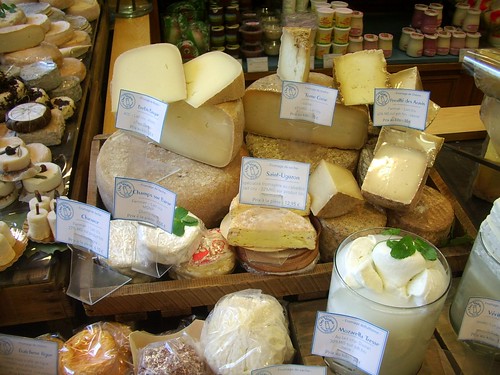
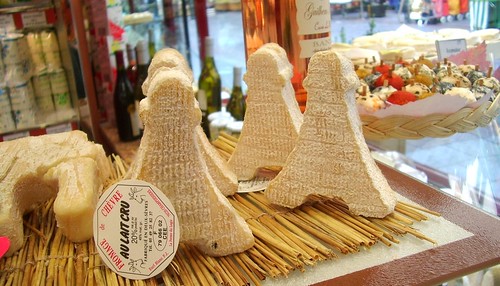
1) The cheese!
Obviously


2) The people we've met and the friends we've made

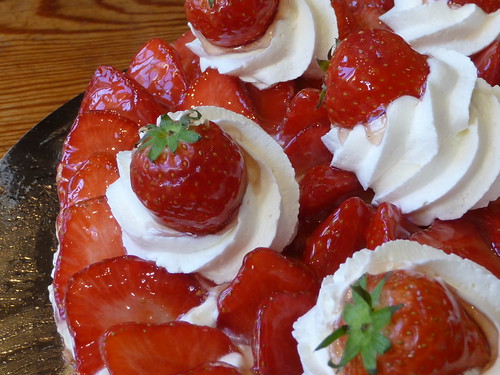
3) The food
You just can't think of France without thinking of food. It is the raison d'être.


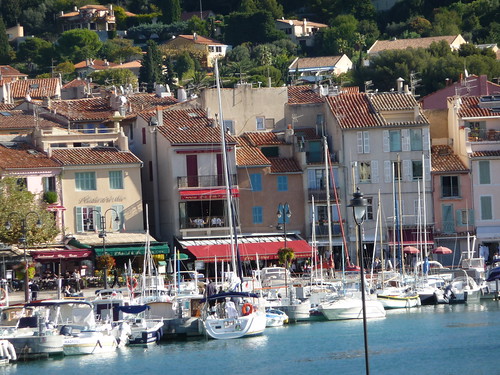
4) Quaint harbor towns
Honfleur, Saint-Palais-sur-Mer, Collioure, Cassis, Antibes, Mèze


5) The health care
Just read the story of my broken arm and you'll understand why.

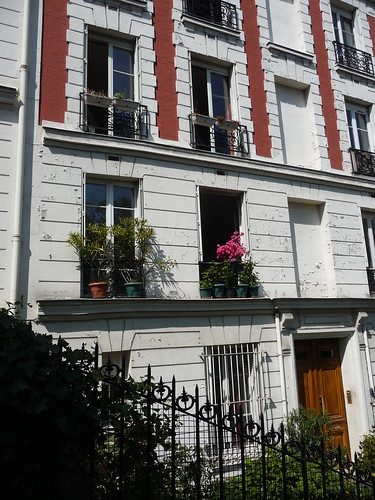
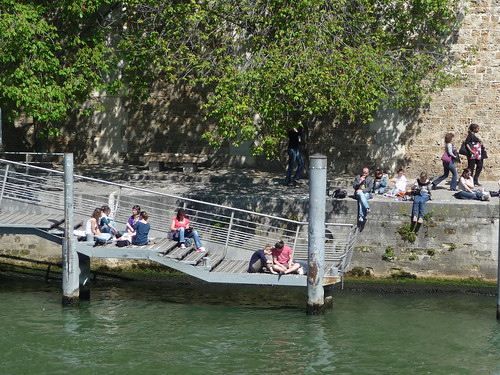
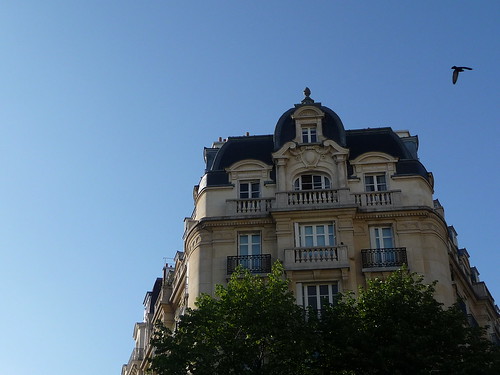
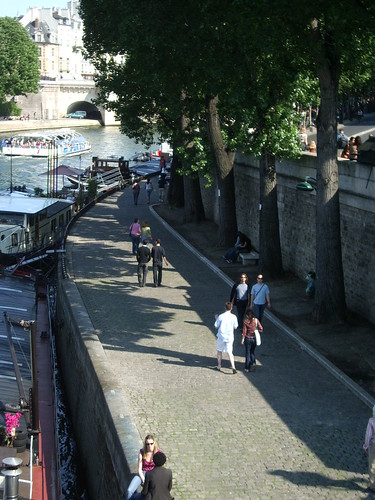
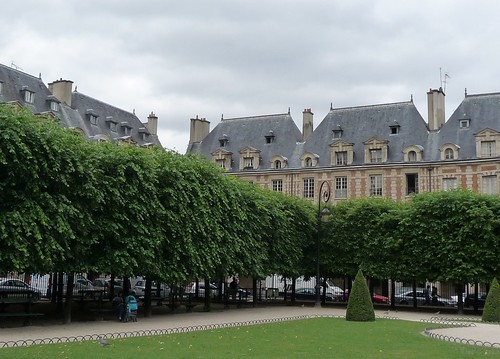
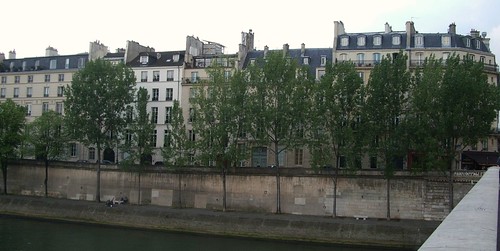
6) Paris
I am totally smitten with this city.


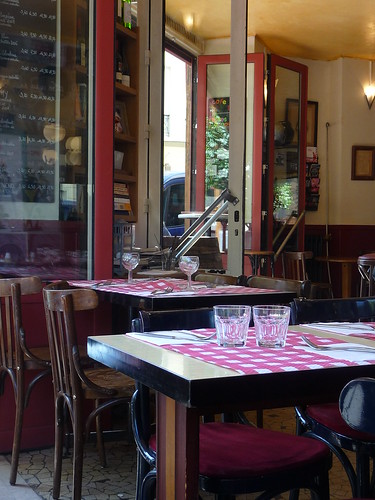
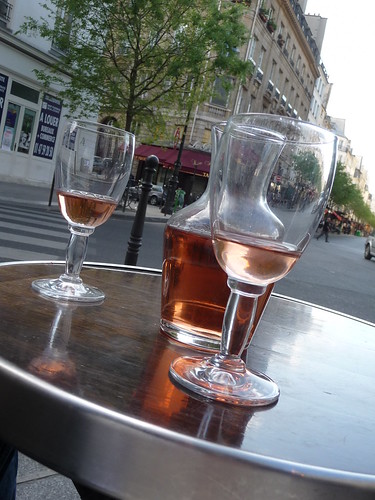
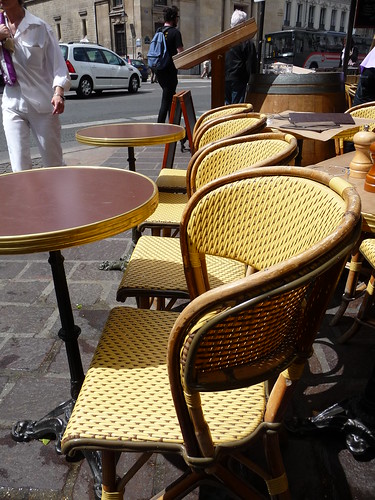
7) The cafés
Simple, honest food, wine by the carafe and the best people watching.


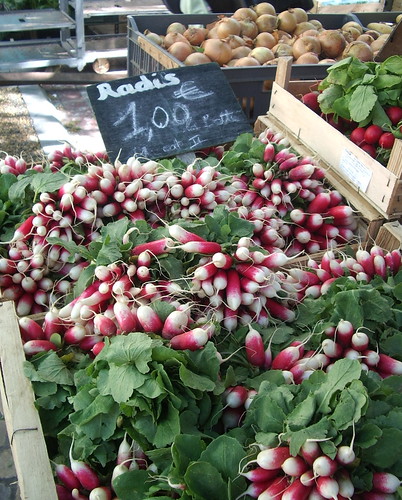
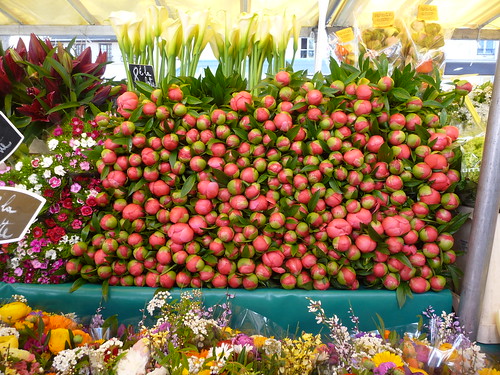
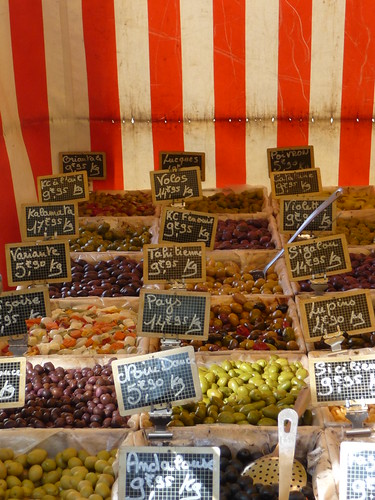
8) The markets
So cliché, I know. But they are an intrinsic part of life in France and I love shopping at them.


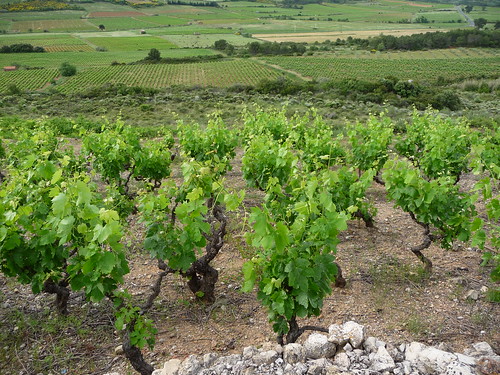
9) The vineyards


10) I am now one of them
"Bienvenue au club," they say with a smile.

April 26, 2010

Wandering in Paris

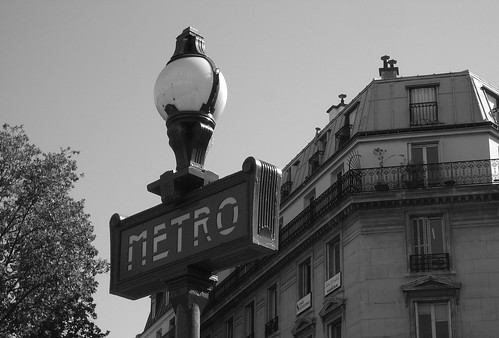
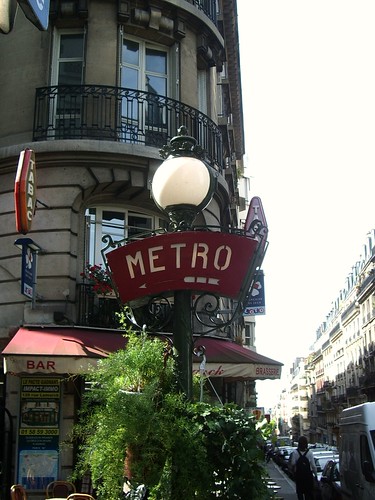
The Paris Metro. Reliable and functional.
I like knowing that I can move about the city, quickly and easily (most of the time). It serves its purpose.

But my favorite way to see Paris is to wander. Sometimes with a map, sometimes aimlessly, always with my camera in hand.
Because down there in the Metro tunnels you can't savor the sights and sounds of the markets or explore the quirky shops and little alleyways or ensconce yourself in a café for several hours while you take in the street life.

To me, Paris is best explored on foot. With little or no destination in mind. Just wandering.


April 20, 2010

I Love Paris


Six days in springtime Paris. Starts tomorrow.

April 18, 2010

Blog Notes


Pages

I've updated Chez Loulou to include pages, which are located under the header photo.
There's a bit of info about me, a weekly updated French cheese list, the links to both my flickr page and Facebook page, the story of how I attained French Citizenship and of course, the ongoing Moving to France Tutorial.
There is also a Links list - if you'd like to be added, please let me know in a comment on this post.


La Fête du Fromage International Cheese Tasting Event

I've hosted this monthly event for the last year and a half and have decided to put it to rest. A giant thank you to everyone who participated!
That doesn't mean that my weekly cheese tasting, also called La Fête du Fromage, will end. I plan on faithfully tasting my way through every French cheese I can get my hands on.
Here's the list thus far.


The Moving to France Tutorial

I'm amazed by the huge response I've gotten from this little tutorial.
It's great to be able to answer some of those seemingly unanswerable questions about what it takes to move to France and to make the process seem possible. (even though it may sometimes look impossible!)
If anyone has information to add, or would like to share their moving to France stories, I would love to hear them.

April 15, 2010

La Fête du Fromage - April Round Up

Well, it's a bit silly to call it a "Round Up," as I only received a single entry this month. However, the entry was a cheese that I've been excited about tasting for quite some time now.

Thanks to Camille for joining in April's La Fête du Fromage International Cheese Tasting Event and convincing me that the next time I come across Fribourg d’Alpage, I must buy a wedge. A big wedge.
She describes this cow's milk, Gruyère-style cheese from the Alps as complex and having "nutty, rich characteristics" and as "earthy, grassy, nutty, salty, with a hint of tang and a finish that leaves you salivating for more."
Wow! Sounds wonderful!


~~~~~~~~~~~~~~~~~~~~~

My contribution is Cantal Vieux, or "aged Cantal." I wrote about it's younger incarnation, Cantal Entre-Deux, three years ago and must say that if given a choice between the two, Cantal Vieux wins hands down.
This version, aged anywhere from six to fourteen months, is a bit drier and crumblier, with rich hazelnut and grassy flavors. One of those perfectly balanced, lovely French cheeses that is very easy to fall head over heels with.


~~~~~~~~~~~~~~~~~~~~

I'm undecided whether to continue doing this monthly Cheese Tasting Event or not. Interest seems to have lagged, so this month might be the last. I'll decide in a few days if I should keep it going.
Of course, my weekly Fête du Fromage will continue. 167 cheeses tasted. Many, many left to go!

April 14, 2010

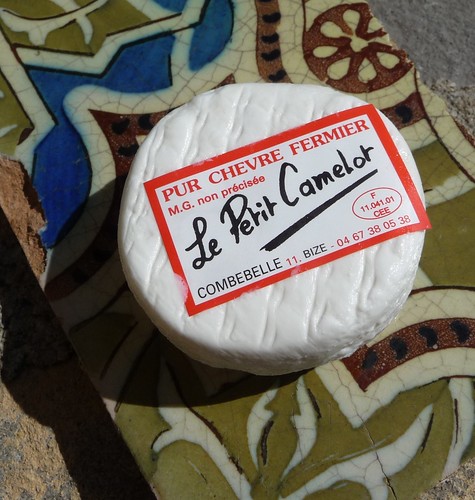
La Fête du Fromage - Le Petit Camelot

There are so many reasons to visit the Languedoc-Roussillon. The stunning scenery, the Mediterranean beaches, the Cassoulet, the wine.
And the cheese.

Not quite sure why I never bothered to buy a little disc or two of Le Petit Camelot before this week, especially after falling in love with their cool-looking, snake skin textured cheese, L'Écu, a couple of years ago.
It's sold at various fromageries in Béziers, Narbonne and Carcassonne, and wine/olive/produits du terroir shops in the region, so I have had the chance numerous times.

Better late than never, I always say.

Le Petit Camelot is produced on the farm where I was able to source the goat's milk to make my own cheese last week. After tasting this one I'm convinced that they produce some of the most delicate, delicious and delightful fromages de chèvre in the Languedoc.

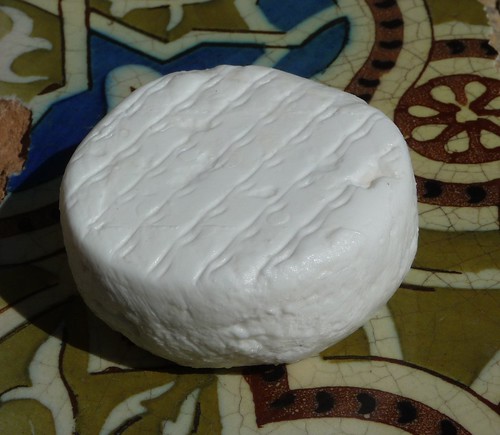
The flavor is that of soft, fresh milk, with a slight tang, well-balanced and not at all goaty. I envision it spread on some walnut bread and drizzled with some acacia honey. Or maybe stuffed into ripe tomatoes and sprinkled with some minced chives and garlic.

But it was superb on its own - simple and sweet. Enjoyed with a glass of red wine from just down the road.

April 12, 2010

Moving to France Tutorial - Part Four


In Part Four of the Tutorial I would like to introduce you to the Residency Card, the Carte de Séjour.

The Carte de Séjour rules have changed since we arrived in France seven years ago. If you're staying in France less than one year, i.e., the length of a Long Stay Visa, as long as that visa is valid, you're fine. Once the clock strikes midnight on the 365th day however, you will need a Carte de Séjour in hand.

If you have one of the following visas and want to reside in France for only 12 months, then you will not need to apply for a Carte de Séjour. Lucky you!
  • long stay non-working visa (visiteur)
  • long stay visa to work in France (assistants, lecturers, full time and temporary workers)
  • long stay visa to study in France (students, au pairs, interns)
  • long stay visa for spouses of French nationals
However, that doesn't mean that you are exempt from a little meet and greet with a French fonctionnaire. You are still required to register with the Immigration Office.
Upon your arrival in France you will need to send a registered letter with return receipt (une lettre recommandé avec demande d'avis de réception) to your local offices of the OFII: the Office Français de l'Immigration et de l'Intégration.
The letter will need to include the following:
  • the application form, stamped by the French Consulate when they granted your visa
  • your visa number
  • your date of entry in France or the Schengen country
  • your address in France
  • copies of the ID pages in your passport and the immigration stamp received when you landed
You will then be requested to appear for an interview and medical exam with the following:
  • your passport
  • proof of accommodation in France
  • one ID picture
  • payment for the processing fees - 55€ for students, 70€ for workers, 300€ for visitors
When your dossier is complete, a registration stamp will be added to your passport.

If your plans change and you need to stay longer than one year, you need to apply with your local Préfecture, Sous-Préfecture or Préfecture de Police (if residing in Paris) at least two months before your visa expires.

If your plan is to stay for more than a year, then you will need a Carte de Séjour. You should apply in person within two months of your arrival in France at the Service des Étrangers section of your local Préfecture, Sous-Préfecture, or the Préfecture de Police (if residing in Paris).

You will need the following, in their original form, plus two photocopies of each, just to be safe. Also, any certificates (such as marriage and birth) not in French will need to be translated by an official, court-certified translator (names of translators are available from Préfectures, Consulates and police stations). When we had ours translated it was 40€ a page, so make sure that your bank balance is healthy!
  • a valid passport
  • a valid long stay visa (which is in your passport)
  • birth certificate with parents names listed (sometimes it must be issued within the previous 3 months)
  • marriage certificate
  • birth certificates of dependent children if applicable
  • proof of permanent address in France (EDF bill or the house deed of sale (acte de vente) for a house bought in France or a signed lease agreement for the French address)
  • recent medical certificate issued by the OFII- they will send you a notice of where and when your medical exam is to take place and the certificate will be added to your dossier
  • three recent ID photographs
A few additional items to have ready:
  • details of your parents places of birth and your mother's maiden name
  • two stamped, self-addressed envelopes are sometimes, but not always, asked for
There will be extra requirements for different types of Cartes de Séjour and your local government office will give you a list of any additional documents you must provide. Just don't be surprised if, when you arrive with everything they have asked for, all bundled in a nice little folder, they demand yet another random piece of paper. C'est normal.

There are several different types of Carte de Séjour - assistant/lecteur-visiteur, étudiant, travailleur temporaire, vie privée et familiale, visiteur, salarié, compétences et talents - and the fee for the application depends on what type you are applying for.

Once an application has been made, you will be given a temporary, renewable receipt, a récépissé. This is valid for three months and allows you to stay in France while your application is being processed.
We were never issued a récépissé for some reason. We applied for our Cartes and waited. And waited. They finally arrived several months later and every year we went through the frustrating process all over again.

One of the important things to remember is that, even though there is a basic list of documents that France requires, each Mairie, Préfecture, etc., seems to have its own rules and way of doing things.
So you learn to be flexible, to cajole the powers-that-be with some homemade brownies, to enjoy another glass of wine and another morsel of French cheese. While you learn the art of patience. Infinite patience.

Stay tuned for Part Five of the Tutorial in a couple of weeks. We've got guests arriving and I'm off to Paris for six days, so the Tutorial is going to have to wait!

If you live in France and have a Carte de Séjour story to share, bad or good (do good CdS stories even exist?) please feel free to share them in the comments.


*Please note that the information given here, while believed to be as accurate as possible at the time of writing, is general information only, and no liability can be accepted. Before acting on the information, please ensure that you take expert advice from the relevant authorities.

April 11, 2010

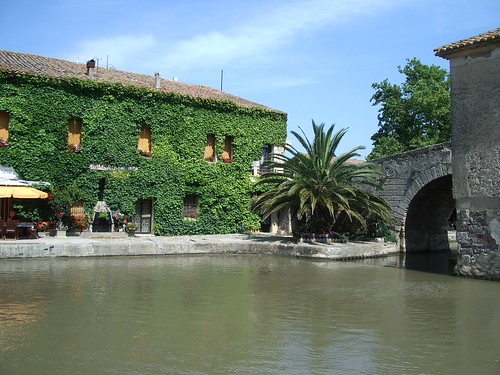
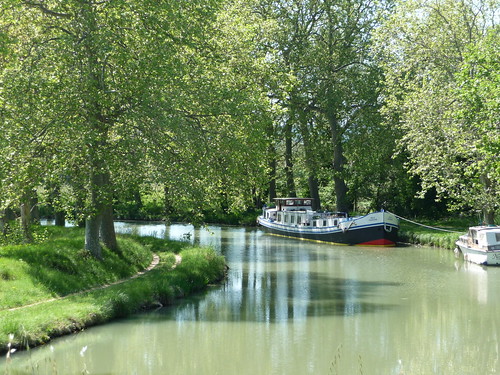
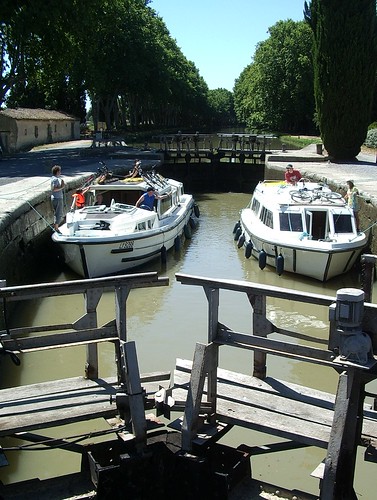
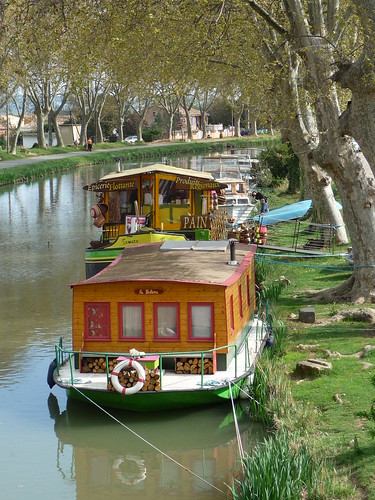
The Canal du Midi


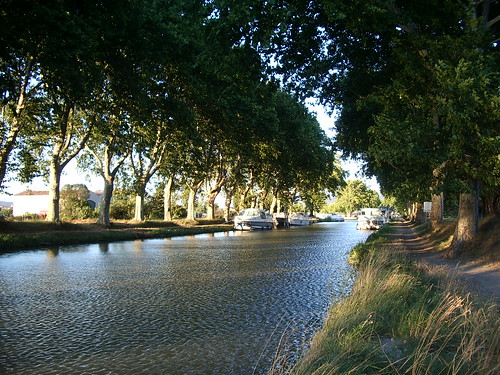
The 150 mile long Canal du Midi ambles its way across the south of France, linking the Mediterranean Sea to the Atlantic Ocean.
Tour boats cruise along at an easygoing 8 knots an hour. Cyclists and trekkers enjoy its scenic tollpaths at a leisurely pace.

It's a place to slow down, take some time out. Have a chilled glass of rosé, a picnic and listen to the birds singing. Nothing moves fast here.

April 7, 2010

La Fête du Fromage - Homemade Chèvre

Technically this is a French cheese. The milk came from French goats and it was made in France.
It is my French cheese. Homemade chèvre frais.
For the last year I've planned to make some of my own cheese and just never got around to doing it. Procrastination sometimes gets the best of me.
So when I was offered a couple of liters of extremely fresh goat's milk the other day, I grabbed some cheesecloth and a lemon and in just under two hours, voilà, I had cheese!
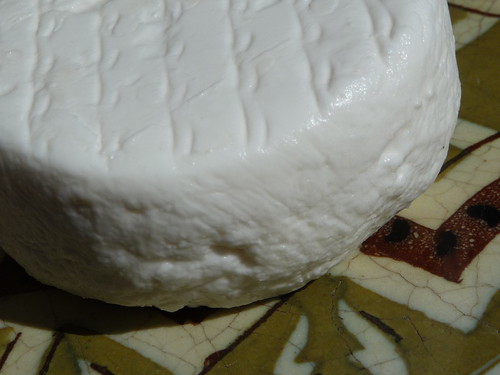
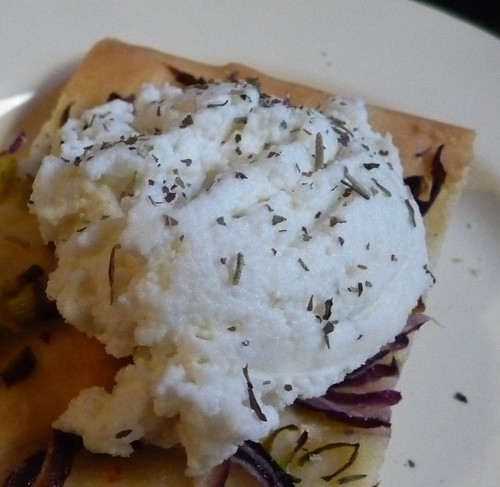
Creamy, snowy white, mild, delicious goat's cheese
. Which I then dressed up with a bit of minced garlic and a sprinkling of herbes de Provence.


The process is so simple it's silly. And it makes me wonder what the heck took me so long to try it.
  • 1 liter (1 quart) goat's milk - pasteurized or unpasteurized, but not ultra-pasteurized*
  • 1/4 cup freshly squeezed lemon juice
  • 1/2 clove minced garlic
  • a pinch or two of sea salt
  • optional - minced herbs such as thyme, herbes de Provence, parsley, rosemary
1. Heat the milk over medium heat until it reaches 180 degrees F on a candy or meat thermometer. I used a meat thermometer because I couldn't find my candy thermometer in the deep, dark recesses of my kitchen utensil drawer.
2. Take the milk off the heat and stir in the lemon juice. The milk should begin to curdle immediately. You'll see the curds separate from the whey.
3. Line a colander with several layers of cheesecloth - I used about 4 layers. You want to make sure that the curds don't get through.
4. Place over a large bowl to catch the whey and ladle the curds and whey into the cheesecloth lined colander.
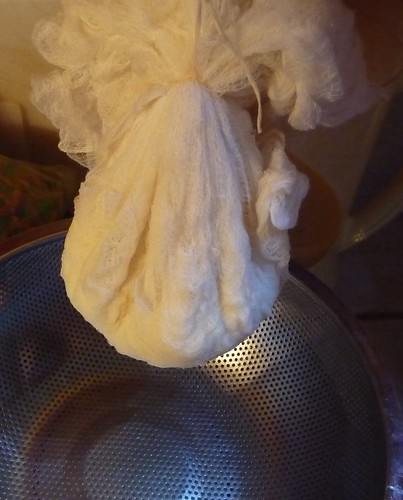
5. Gather the corners of the cheesecloth together and hang from a wooden spoon over a deep bowl for about 60-90 minutes. The consistency will be similar to that of dry cottage cheese.


6. Transfer the curds to a bowl and fold in the salt and optional herbs. If it seems a bit dry you can stir in some whey to create a creamier texture, a teaspoon at a time.
7. Eat.

Your homemade chèvre can be stored in the fridge for 1 week in an airtight container. The texture becomes drier after a day or two, so I recommend eating it pretty quickly. Which you will want to do anyway.


*I used unpasteurized milk and heated it to 185 degrees F

.

April 5, 2010

Moving to France Tutorial - Part Three


Home. It has a different meaning to all of us. And finding a new one can be both an exciting and a daunting experience.
Welcome to Part Three of the Moving to France Tutorial.

This week I'll be offering some tips on finding a place to live in France, which could easily turn into a Tolstoy novel sized post, so I'm going to try to keep the information concise.

I realize I'm stating the obvious here, but the logistics of finding a home in France will change according to whether you will be renting or buying. Once you've decided where you want to put down your roots you'll need to find a real estate agent or start looking at properties online or even hire someone to help you find your dream home.

Renting an apartment in France can be tricky. Most landlords in France demand proof of income and you may have to provide the name of a guarantor, a co-signer, who will be named in the contract and who will be responsible for your rent in the event that you can't pay it. You will also need to have one month's rent as a deposit and a proof of a comprehensive household insurance certificate.
An in-depth list of the requirements is here on Anglo-Info's website.

If you don't plan on bringing all of your furniture and household goods with you, a furnished, equipped home will make your arrival and transition much easier. There are many agencies and individuals offering long term, furnished apartment rentals in big cities like Paris and Lyon, and scattered all over France are furnished vacation homes called gîtes. Gîte owners sometimes offer long term rentals over the autumn and winter months, which can be a perfect way to get to know a region and have a comfortable place to stay while looking for property to buy.

There are literally hundreds of property rental websites out there to investigate. Here are a few to get you started.
Craigslist (and how to avoid the scammers)
FUSAC
pap (in French)
Holidays France Rentals
Franglo
Lodgis
Paris Attitude
Gîtes de France
123 Immo
Rent a Place in France
Rentals France
Go To France
the regional classifieds on AngloInfo

Buying a home in France is a fairly straightforward procedure.
You find the house you want, make an offer, get the inspections done and verify what belongs to the house (both inside and out), find a good notaire, sign the compromis de vente, wait for the 7 day buyer's remorse period to pass, pay your deposit and wait to sign the acte de vente. Then you take your keys and move in!
Well, there might be extra steps involved, if you require a mortgage for instance, but buying a house here isn't as daunting as many think.
Expatica France has compiled an excellent and thorough article about the entire process.

Mortgages are available to foreigners, usually requiring a 20-30% down payment. I'm unfamiliar with the exact procedure so here are some helpful links.
BNP-Parisbas
Finance in France
Mortgage France

An important thing to remember if you buy a house that requires any renovation work - get an estimate. Heck, get two or three. Keep in mind however, that in old houses estimates don't take into consideration those petite surprises that you sometimes find behind the walls. Unless you are planning to be there while the renovation work is going on and you speak fluent French, you will also need to find a knowledgeable person to oversee your project.


Stay tuned for Part Four of the tutorial next week.

Web Analytics